
Customer, R&D Partner
NASA Goddard Space Flight Center
Project Publication
https://doi.org/10.3390/s21093081
Fibertek advances lidar performance for planetary exploration.
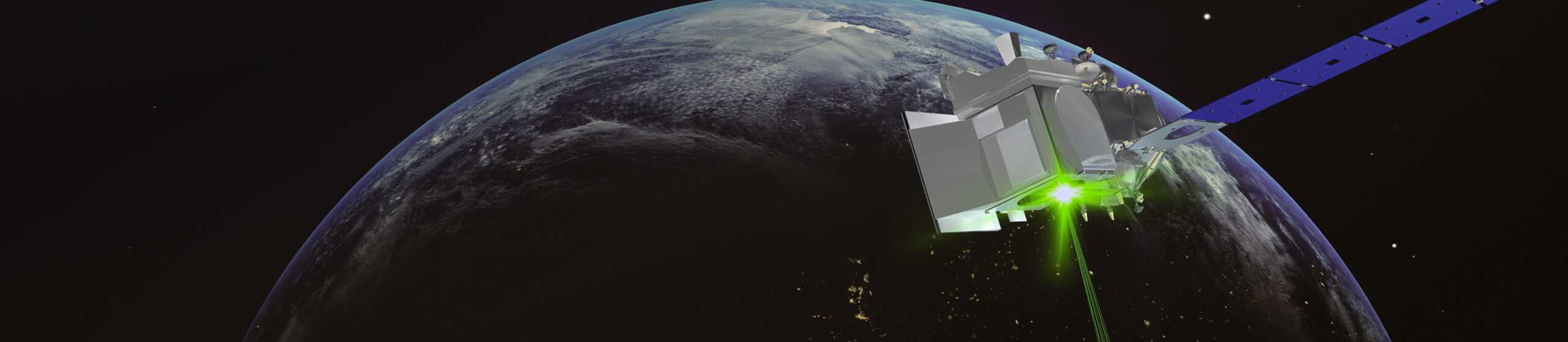
NASA’s Small All-Range Lidar (SALi) represents a leap forward in lidar technology, offering compact, lightweight, and power-efficient performance tailored for space missions exploring planets, asteroids, and comets.
SALi will be a cornerstone technology for crewed and robotic missions across the solar system.
- Multi-beam (8-16) capabilities that support high-resolution 3D mapping and real-time topographic measurements
- Critical navigation data during spacecraft descent and landing
- Exceptional performance in size, weight, and power efficiency to meet strict payload constraints
Mission and Challenges
Unlike traditional lidars, SALi integrates multiple beam paths and scanning capabilities to deliver high-resolution topographic mapping and altimetry across a wide range of distances—from meters to hundreds of kilometers. Its unique design enables precise measurements of surface slope, roughness, and geophysical parameters such as size, shape, spin rate, and density of celestial bodies.
SALi’s versatility makes it ideal for planetary exploration, including asteroid and comet missions, where it can support safe landing, navigation, and hazard avoidance. It also enhances spacecraft guidance during descent and touchdown by providing real-time altitude and velocity data. With its ability to operate effectively in diverse environments and across varied terrains, SALi is poised to become a foundational tool for future robotic and crewed missions across the solar system.
Fibertek’s Contribution and Results
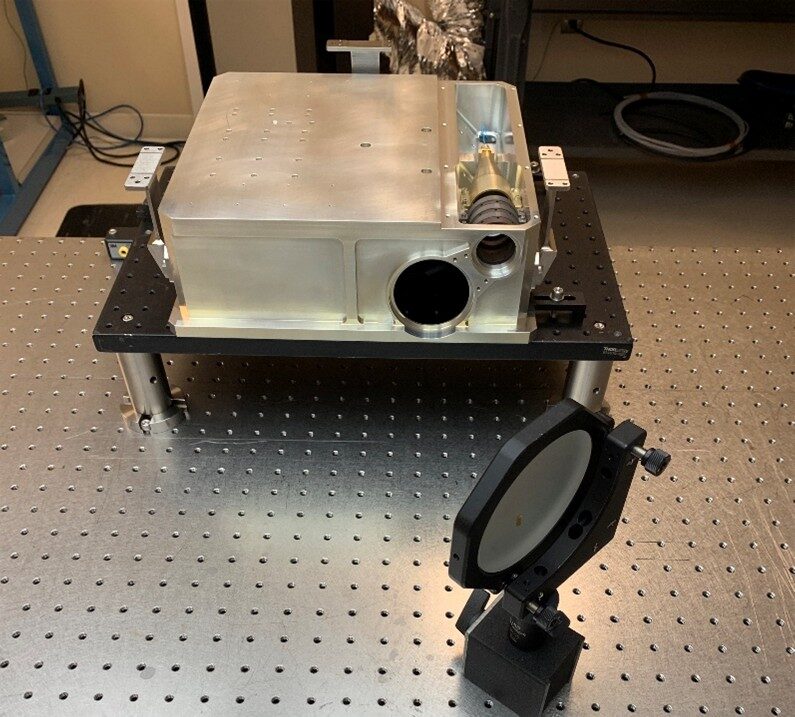
Fibertek developed NASA’s SALi hardware system by leveraging its heritage in CubeSat-sized space laser communication designs, delivering a compact, affordable, and high-performance package compared to previous lidar generations. Drawing on decades of expertise in space-based lidar, Fibertek engineered ruggedized components capable of withstanding the harsh conditions of planetary exploration.
Advanced laser systems enable SALi’s multi-beam (8-16) capabilities, supporting high-resolution 3D mapping and real-time topographic measurements of planetary surfaces, moons, and small celestial bodies. SALi also provides critical navigation data during spacecraft descent and landing, enhancing hazard avoidance and enabling precision touchdown on asteroids, comets, and other planetary terrains.
Fibertek’s contributions allow SALi to achieve exceptional performance in size, weight, and power efficiency—essential for missions with strict payload constraints. These innovations position SALi as a cornerstone technology for delivering accurate topographic and geophysical data over a broad range of distances.