
Customer
NASA Goddard Space Flight Center
Program Webpage
Home | ICESat-2
Fibertek’s laser transmitters enable the groundbreaking science driving this mission.
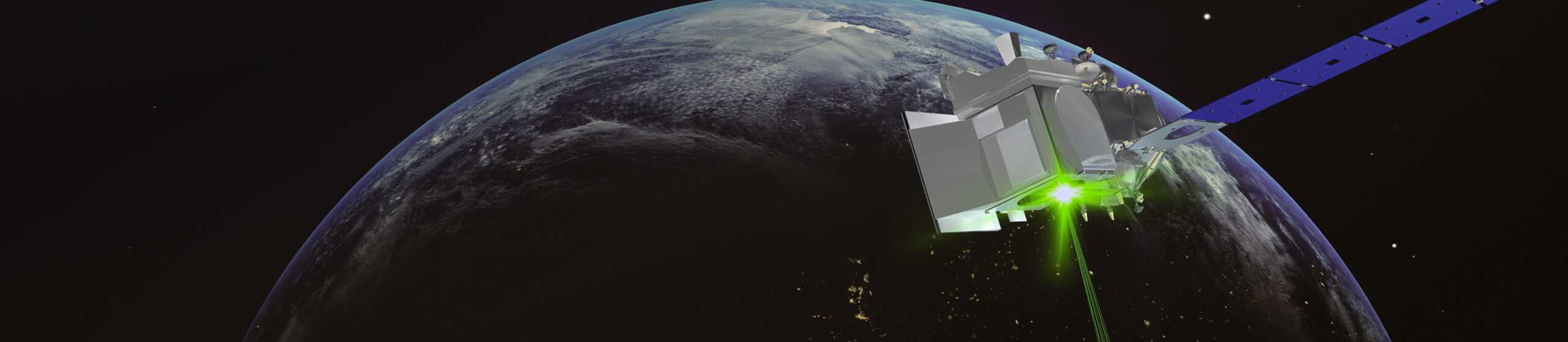
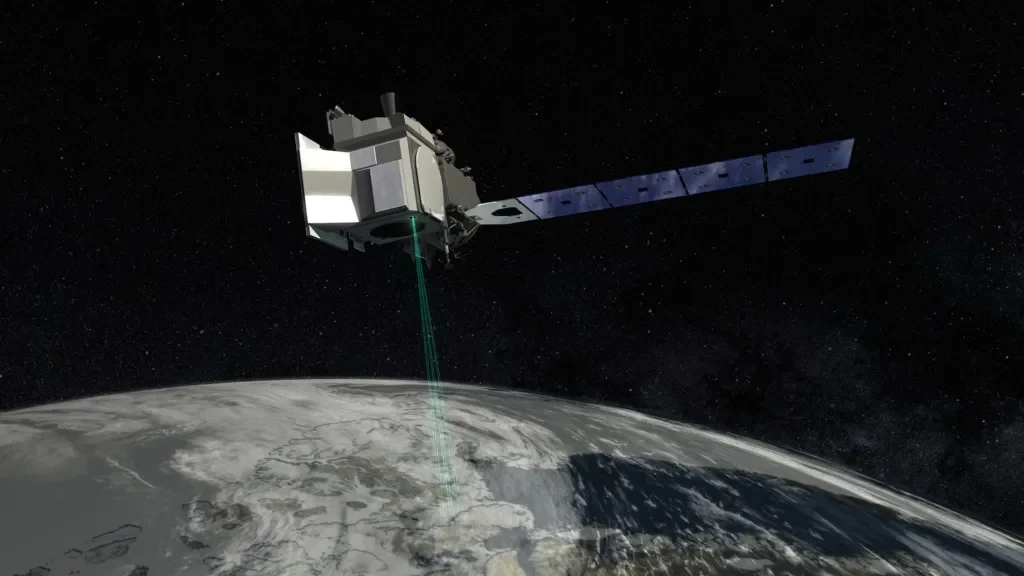
Fibertek developed and delivered space-qualified laser transmitters to power the Advanced Topographic Laser Altimeter System (ATLAS) for NASA’s ICESat-2 mission. Fibertek also provided the ATLAS instrument’s photon-counting detector electronics.
Precise, reliable laser solution has enabled exceptional accuracy and longevity.
- Radiation-tolerant electronics, redundancy, and precision beam control
- Operating at 532 nm with ~1 mJ pulse energy at a 10 kHz repetition rate
- Continued, consistent performance after 2 trillion laser shots and 7 years of operation in space
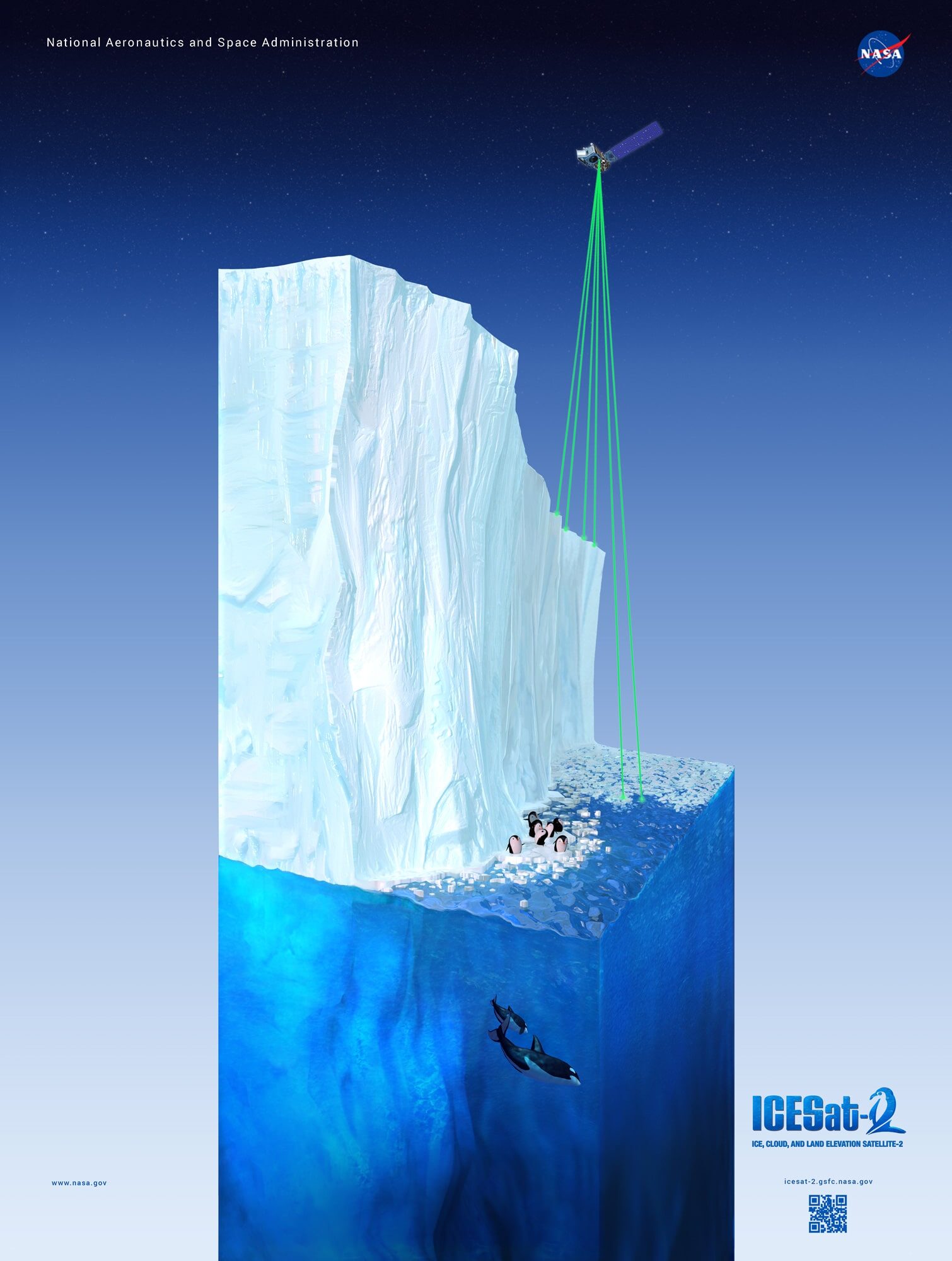
Mission and Challenges
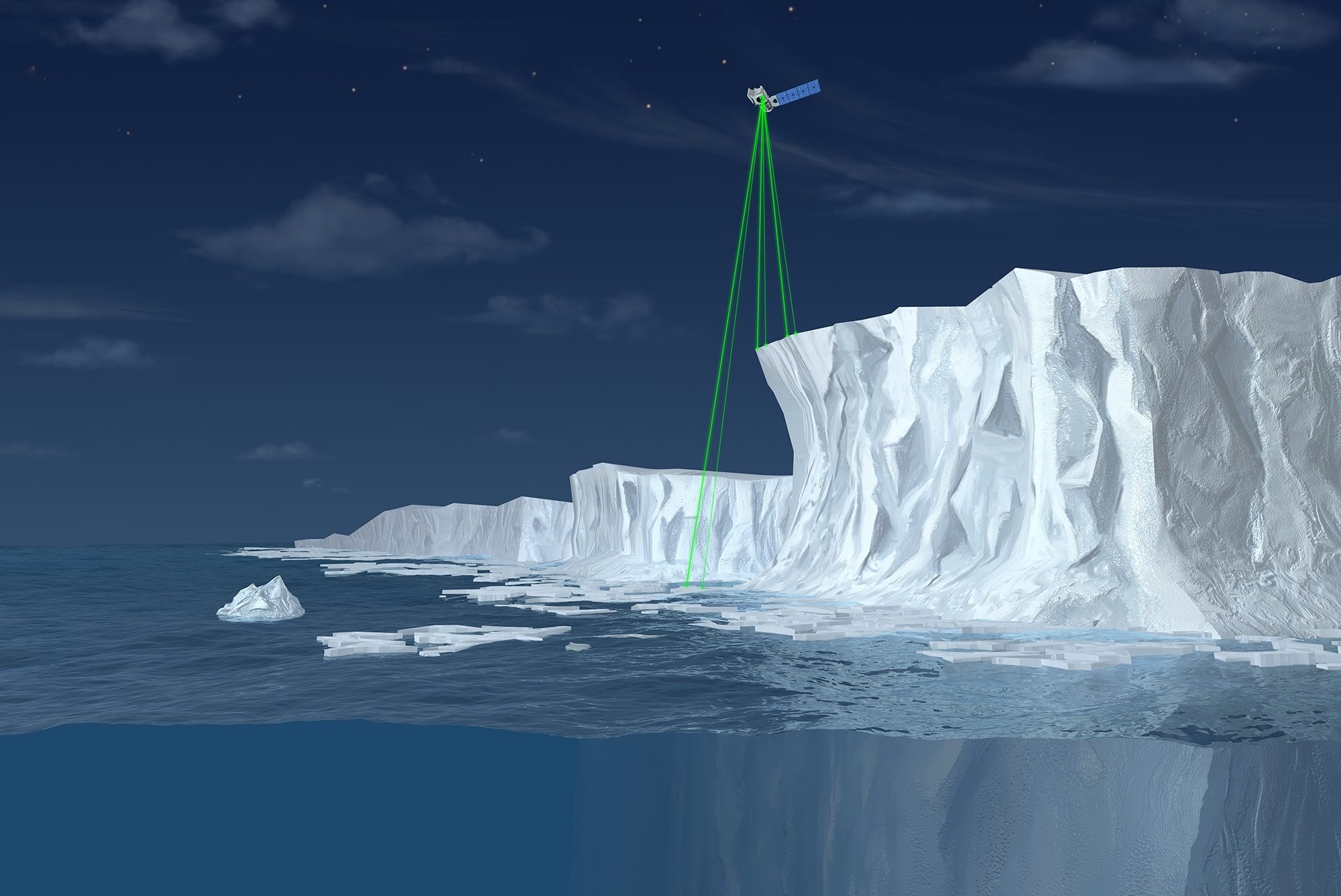
The ICESat-2 mission, led by NASA, aims to advance our understanding of Earth’s changing climate through precise, space-based measurements of ice sheet elevation, sea ice thickness, and global vegetation canopy height. At the heart of the mission is ATLAS, a sophisticated instrument designed to deliver transformative data on the dynamics of polar ice and other critical Earth systems. With sub-decimeter elevation accuracy, ICESat-2 provides researchers with unprecedented insight into the mass balance of ice sheets and the broader implications for sea-level rise and climate change. Beyond the cryosphere, ICESat-2 also contributes to monitoring forest biomass, mapping inland water bodies, and supporting ecosystem and hydrological research. By generating high-resolution, repeat measurements over time, the mission plays a vital role in building long-term climate data records and informing global environmental policy and decision making.
Fibertek’s Contribution and Results
Fibertek played a critical role in enabling ICESat-2’s scientific mission by developing and delivering three space-qualified laser transmitters to power the ATLAS instrument. Fibertek also provided the ATLAS photon-counting detector electronics for 120 individual detectors with picosecond resolution.
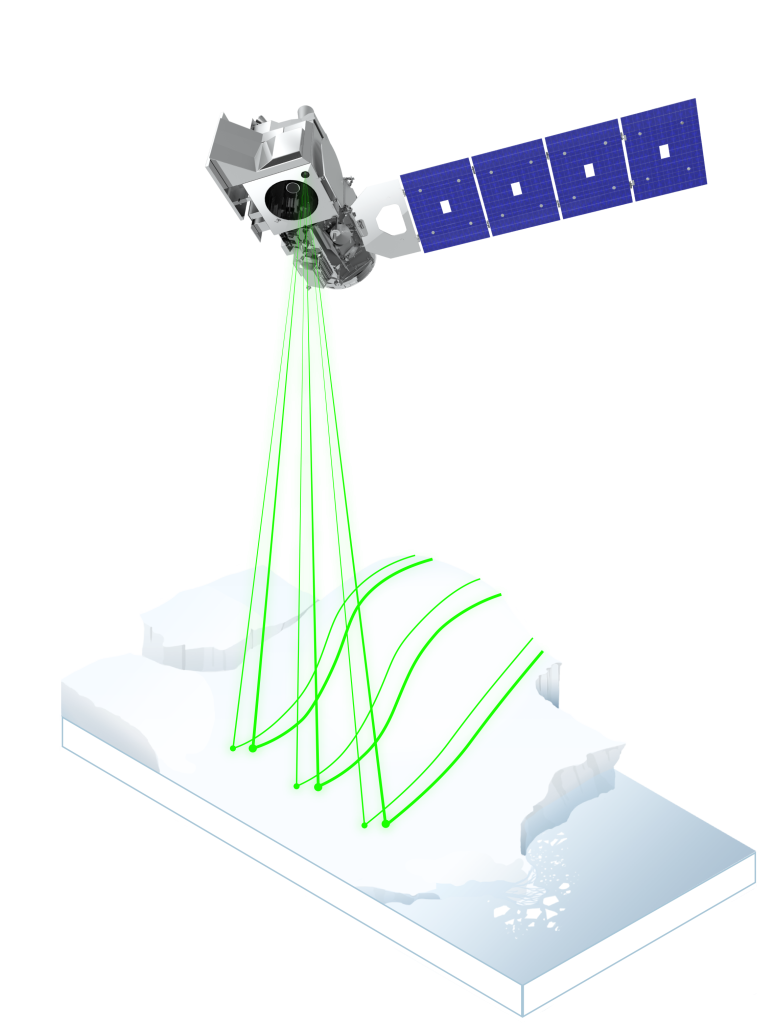
Operating at 532 nm with ~1 mJ pulse energy at a 10 kHz repetition rate, one of the system’s two lasers has fired trillions of pulses from orbit while maintaining stable, high-performance output. The design features radiation-tolerant electronics, redundancy, and precision beam quality control—ensuring reliable operation in the harsh conditions of low Earth orbit. With a short 1 ns pulse width and high repetition rate, the lasers enable ATLAS to achieve 70 cm footprint measurements with exceptional sub-decimeter accuracy.
The laser system has exceeded its expected mission lifetime, continuing to deliver consistent performance after 2 trillion laser shots and more than seven years of operation, well beyond original projections. This long-lived, precise laser system has been instrumental in delivering the mission’s high-resolution elevation data, supporting critical climate science and Earth system monitoring.