
Customer
Sigma Space Corporation for NASA Jet Propulsion Laboratory
Program Webpage
Europa Clipper – NASA Science
Fibertek developed a compact EDL lidar transmitter to meet the challenges of Jupiter’s icy moon.
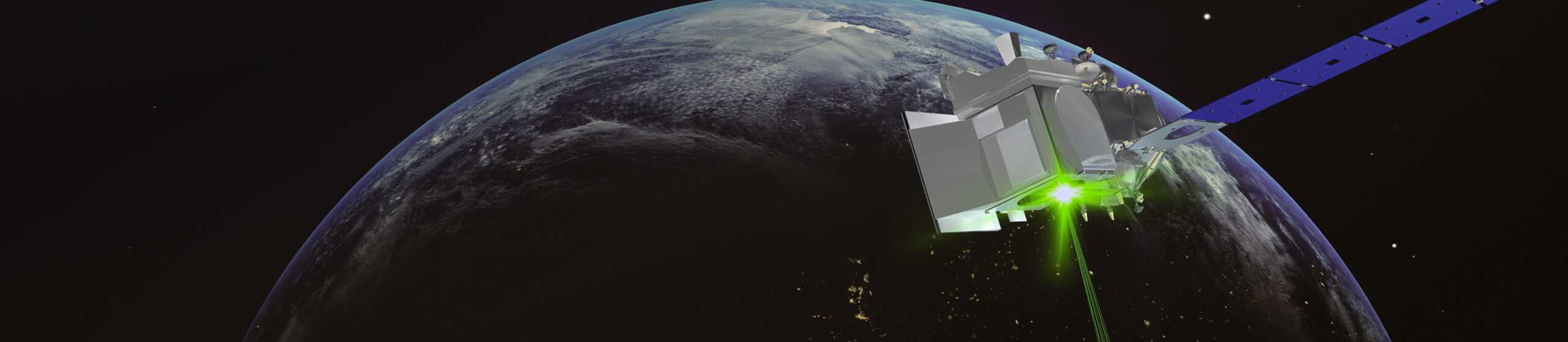
Fibertek contributed to NASA’s Europa Lander effort by developing a high-performance compact laser transmitter to power the spacecraft’s entry, descent, and landing lidar system.
Compact laser transmitter is designed for high performance in cryogenic temperatures.
- Endures extreme cold and deep space vacuum
- Enables high pulse repetition rates for accurate, high-resolution 3D terrain mapping
- Fits in the palm of the hand
Mission and Challenges
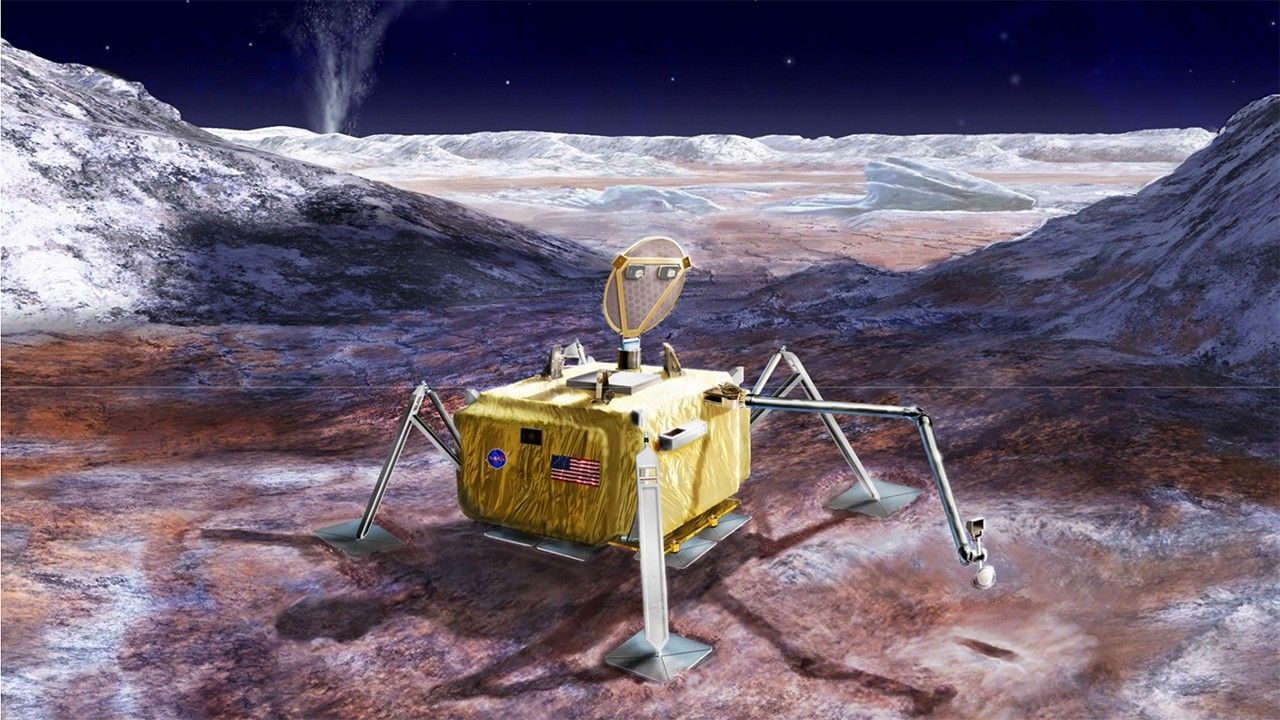
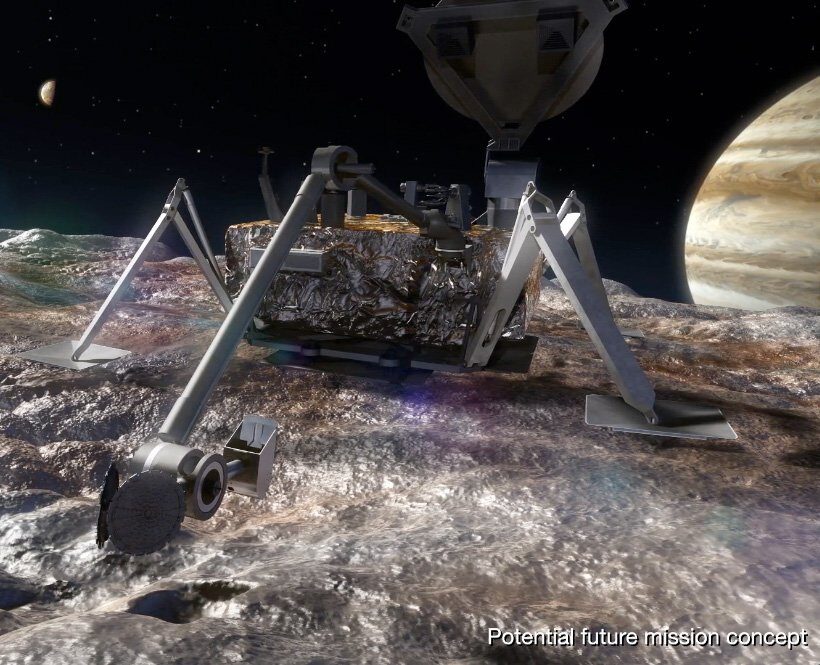
The Europa Lander mission is a proposed NASA concept aimed at investigating the potential for life on Jupiter’s icy moon Europa by analyzing surface and near-surface materials for biosignatures. To support this ambitious scientific goal, the Lander must safely descend onto and operate on one of the most challenging planetary surfaces in the solar system—characterized by rugged ice, steep ridges, and a high-radiation environment, all without the benefit of GPS or real-time ground support. This makes advanced onboard navigation, terrain-relative mapping, and hazard avoidance systems absolutely critical. Lidar plays a central role in enabling real-time 3D mapping of Europa’s surface during descent, providing the resolution and accuracy needed to detect hazards that could compromise the landing or the mission’s short operational lifetime. These systems must function autonomously, withstand intense radiation, operate in extreme cold and vacuum, and meet strict size, weight, and power (SWaP) constraints. Beyond ensuring a safe landing, high-resolution lidar data supports the mission’s broader goals—selecting scientifically rich sites, maximizing the value of surface operations, and paving the way for future exploration of Europa’s oceanic environment and its potential habitability. The Europa Lander mission was ultimately not selected for development, as NASA deemed the mission to be premature without detailed surface data from the preceding Europa Clipper mission to ensure scientific return and mission safety. However, future lander mission concept studies are still ongoing.
Fibertek’s Contribution and Results
Based on ICESat-2 TRL-9 heritage and designed to operate in the extreme conditions of Europa’s environment, Fibertek’s laser transmitter can endure deep space vacuum, cryogenic temperatures, and intense radiation. The laser delivers the reliability and precision needed for high-resolution 3D terrain mapping during descent by enabling high pulse repetition rates (pulse energies >80 µJ at 532nm, pulse widths < 1 ns) and sufficient optical power. At the same time, Fibertek’s laser transmitter approach achieves the Europa mission’s strict size, weight, and power (SWaP) constraints in novel ways, resulting in a rugged and compact form factor that fits in the palm of the hand. Fibertek’s radiation-hardened design and proven laser expertise make it a key contributor to the proposed mission’s ability to navigate Europa’s complex, icy terrain with the autonomy and precision required for success.