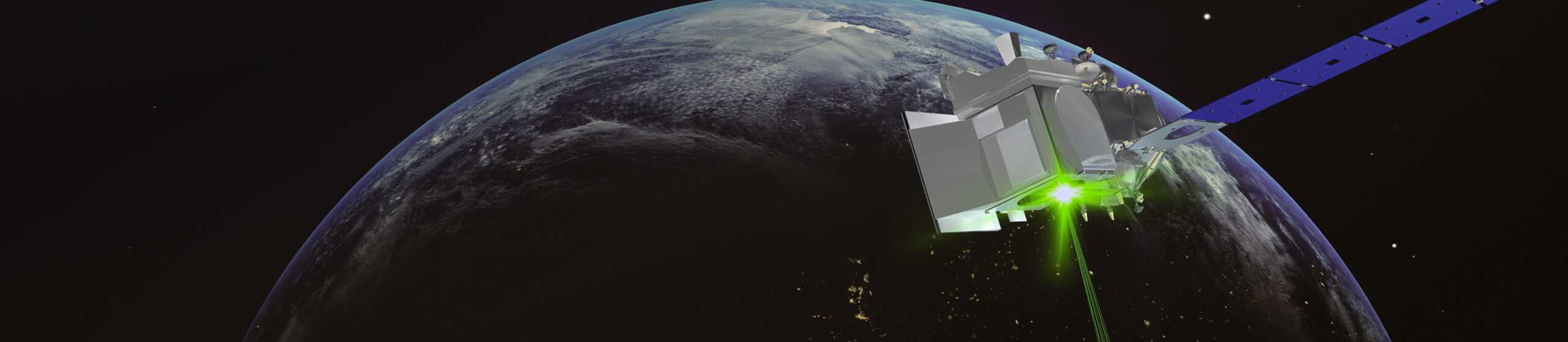


LASER TECHNOLOGIES
Free-space optical communication systems for civil space and national security
Unlock new communications capabilities for your next mission
Fibertek’s laser communications terminals and subsystems are designed for next-generation space missions. Our modular architecture supports proven modems, lasers, and receivers, enabling mission-tailored capabilities.
With a legacy of flight-proven innovation, Fibertek’s free-space optical (FSO) communications systems are built for resilience, scalability, and deep-space operations—from LEO constellations to cislunar and interplanetary missions—providing fast, secure data transmission beyond RF limits.

High-speed data delivery in space
Fibertek’s systems deliver high-throughput, low-latency optical communications for LEO, GEO, lunar, and deep-space applications.
Modular, mission-ready design
From modems to amplifiers and optical heads, our modular components support spiral development, upgrades, and rapid mission customization.
End-to-end space-qualified performance
Every subsystem is space-qualified and engineered for reliable performance in demanding bLEO environments.
Optical communications terminals
Compact free-space optical terminals engineered for long-range, bi-directional communication
Fibertek’s monoblock optical design enables long-term alignment and compact integration, supporting missions from low Earth orbit to the Moon. All terminals support bi-directional communications and bLEO environments and ranges.
6 – 13 cm apertures optimized for platforms and mission profiles
Up to 50 W output power for long-range communications
Low noise receive amplifiers with best-in-class sensitivity
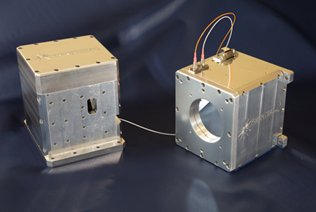
Modular sub-assemblies
Fibertek’s sub-assemblies are the building blocks behind mission-ready optical terminals. Each component is engineered for precision performance and integration flexibility, allowing mission teams to scale capabilities as needs evolve.
Enabling mission data rates at range
Fibertek’s modems support diverse waveforms, from direct-detect to coherent, enabling mission data rates at range.
- Modular design for low investment spiral upgrades
- 100G coherent modem
- SDA 4.0 compatible modem
- Software-defined modems supporting OOK / PPM long-range formats
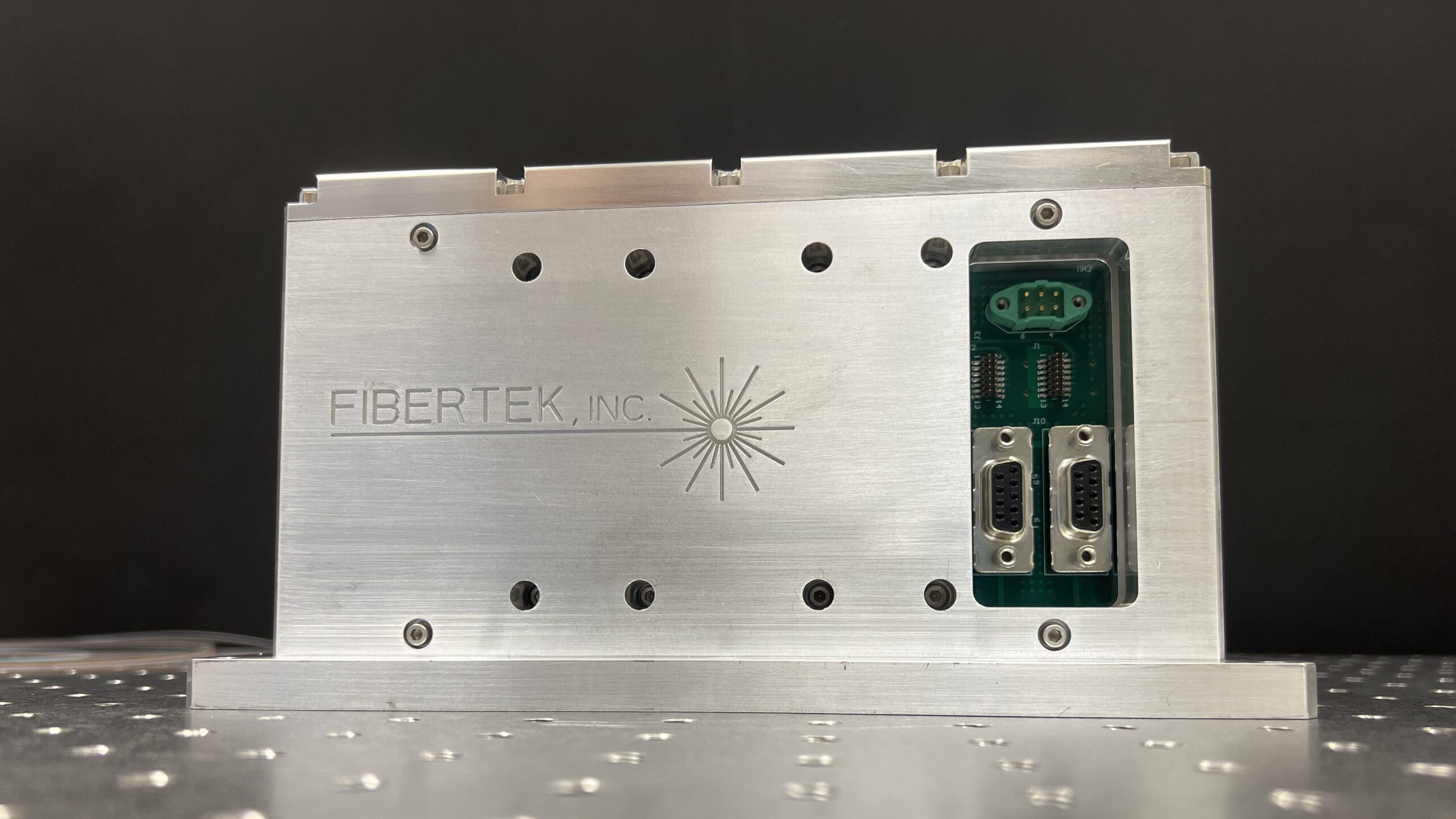
High-powered optical amplifier (transmit)
Fibertek brings state-of-the-art efficiency to low-SWaP amplifiers, paving the way for communication and sensing constellations spanning LEO to cislunar space and beyond.
- 0.5 – 100+ W output power
- Compact < 3 W 1U amplifier card
- Multiple wavelength operation
- 50 W WDM amplifier
Optical low noise amplifier (receive)
Fibertek delivers industry-leading performance in compliance with the latest FSO standards.
- Noise figure of < 3.9 dB
- A/B switchable
- 60 dB gain
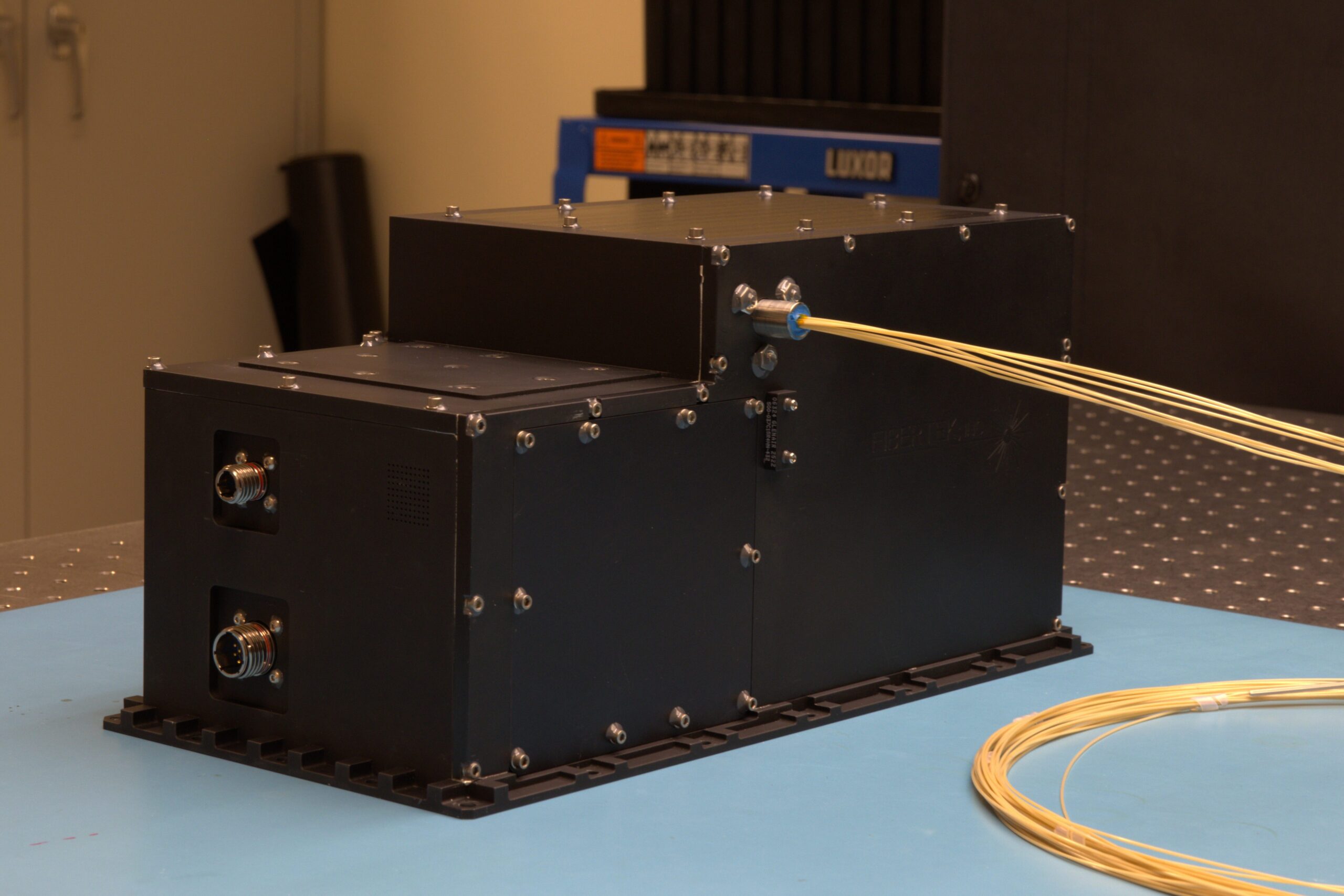
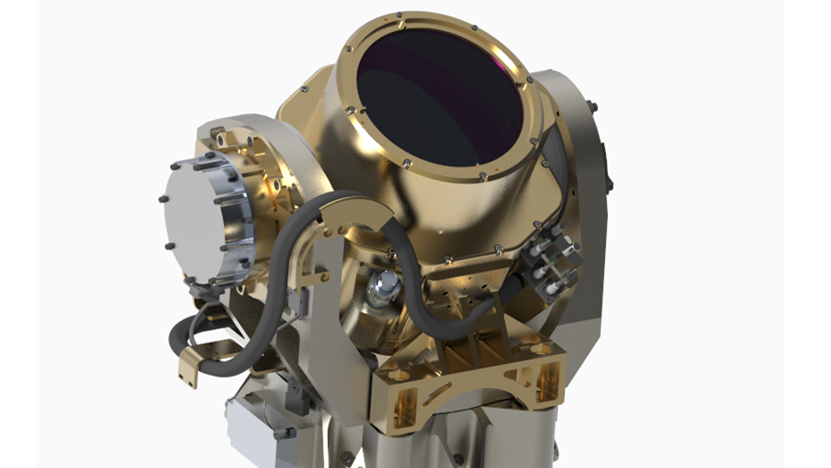
Scalable optical terminals engineered for high-performance laser communications
Fibertek’s offerings spans CubeSat solutions to fully gimbaled platforms, each engineered to meet full mission requirements.
- Hemispherical field of regard
- Fine pointing control
- Bi-directional capabilities
- A/B channel compatible
- Jitter management and mitigation
Flight-proven electronics for high-reliability missions
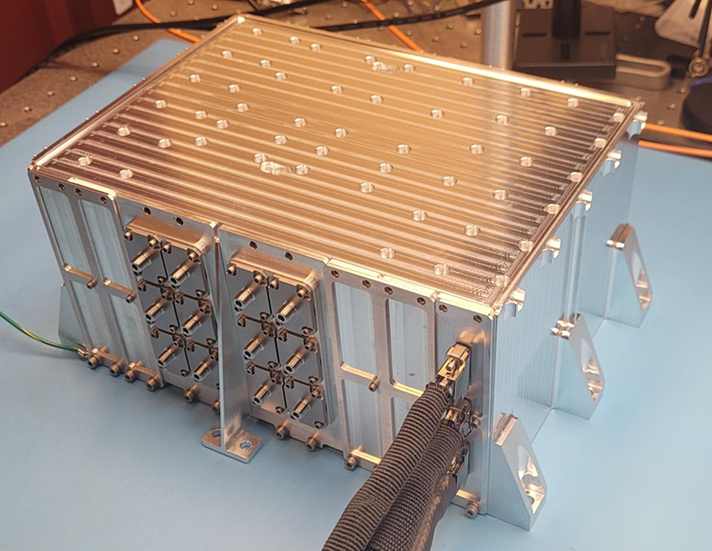
Fibertek’s custom electronics are designed to meet your mission requirements and mission assurance.
- Controller and power electronics
- Pointing, acquisition, and tracking system
- Firmware and embedded software
- Modular cards for spiral development
- Optional redundancy for improved reliability
Case Study
Ground-based uplink laser assembly
Our ground-based uplink laser assembly (ULA) technology is designed to support Earth-to-asteroid, interplanetary, and deep-space optical communication uplinks. The recent implementation of ULA in NASA’s Deep Space Optical Communication (DSOC) technology demonstration mission featured:
- 7 kW pulsed fiber laser assembly delivering binary PPM modulation for deep-space optical uplink and beacon
- Real-time processor and FPGA for data encoding and interlocks
- Stand-alone thermal management and power distribution system
- Command and control for performance monitoring, high-availability redundancy, and safety interlocks.