
Customer
University of Central Florida and NASA Goddard Space Flight Center
Program Webpage
NASA Program Webpage: LISA – NASA Science
ESA Program Webpage: ESA – LISA
Fibertek is a key contributor to the first space-based gravitational wave observatory.
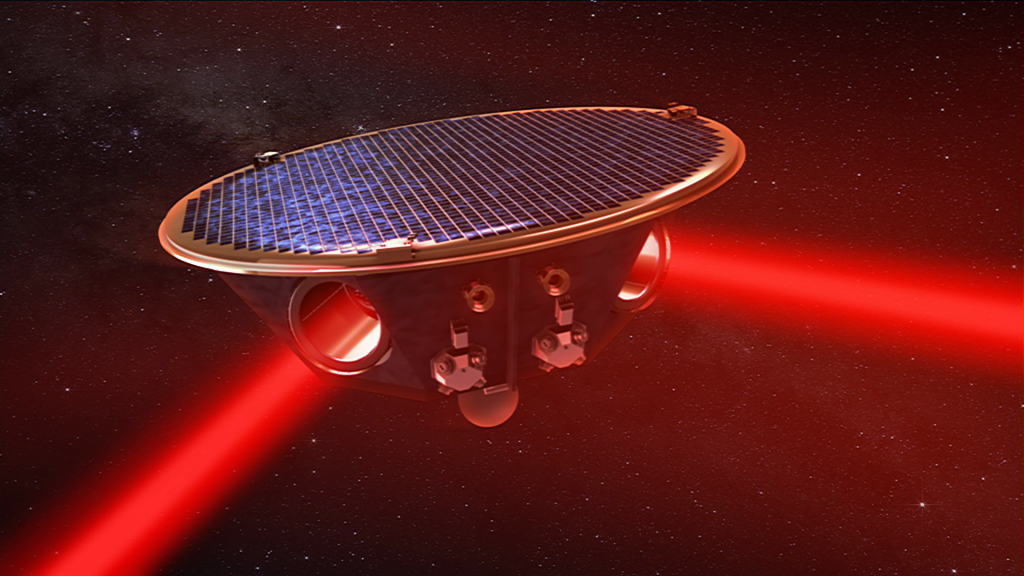
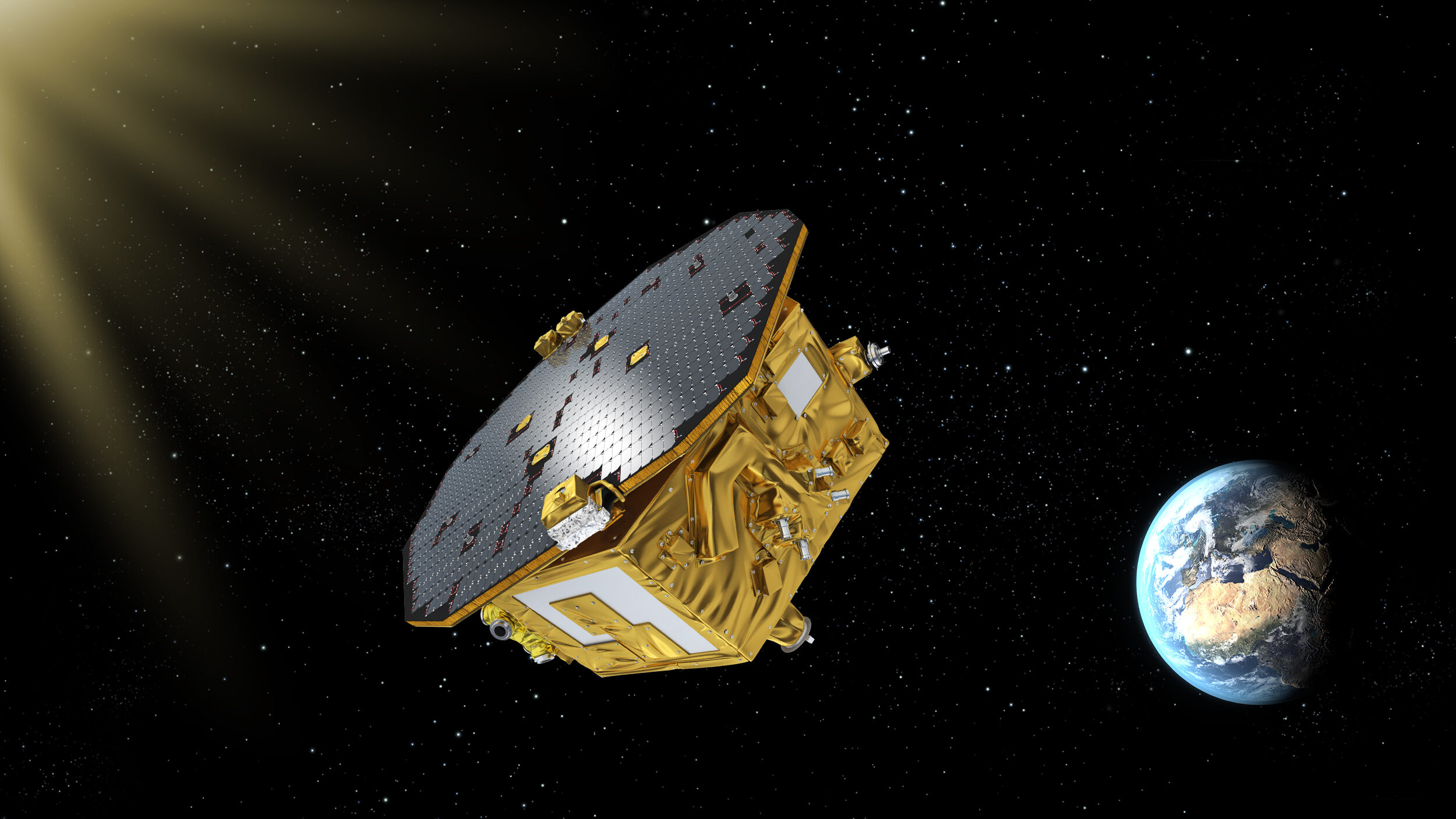
The Laser Interferometer Space Antenna (LISA) is a groundbreaking collaboration between NASA and the European Space Agency (ESA) to detect gravitational waves in space—ripples in spacetime caused by massive cosmic events like black hole mergers. At the forefront of innovation, Fibertek is delivering space-qualified laser amplifiers and a charge management subsystem critical to achieving the mission’s ambitious goals.
High-efficiency laser amplifiers must deliver long-term optical stability.
- Multi-watt, continuous-wave output at 1064 nm
- Exceptionally low noise to maintain laser stability for accurate gravitational wave detection
- Radiation-hardened fiber architectures, advanced pump diode packaging, and precise polarization control
Mission and Challenges
As the first space-based gravitational wave observatory, LISA will enable the observation of low-frequency signals that are undetectable from Earth, offering a new way to study the universe and test fundamental physics. Achieving the sensitivity needed to measure these waves requires deploying a constellation of three spacecraft flying in a triangular formation, separated by 2.5 million kilometers and linked by ultra-precise laser interferometry. This setup must detect incredibly subtle changes in distance—on the order of a trillionth of a meter—requiring measurement sensitivities down to 10⁻²⁶ in strain. Detecting strain sensitivities this small presents major technical challenges, including formation flying over vast distances, managing thermal and optical stability, and minimizing external noise in a harsh space environment. Meeting these demands requires innovations across optical, thermal, and mechanical engineering, pushing the boundaries of space-based measurement systems.
Fibertek’s Contribution and Results
Fibertek is developing high-efficiency, space-qualified laser amplifiers that are critical to the LISA mission’s success. These amplifiers deliver multi-watt, continuous-wave output at 1064 nm with exceptionally low noise—an essential requirement for maintaining the laser stability needed for accurate gravitational wave detection. To meet the extreme demands of the space environment, Fibertek’s designs incorporate radiation-hardened fiber architectures, advanced pump diode packaging, and precise polarization control, ensuring long-term optical stability across the mission’s duration.
In addition to the laser amplifiers, Fibertek is providing the Charge Management Device (CMD) subsystem, which plays a vital role in maintaining the neutrality of LISA’s free-floating test masses. In space, these masses accumulate electrical charge from cosmic rays and solar particles, which can introduce noise into the ultra-sensitive gravitational wave measurements. The CMD uses ultraviolet light to safely discharge the test masses, preserving their pristine free-fall condition. Fibertek’s system builds on prior mission heritage but features significant enhancements for long-duration reliability, including ruggedized UV sources and radiation-tolerant electronics.
In collaboration with an international team of space agencies and scientists, Fibertek’s technologies make it a key enabler of LISA’s groundbreaking mission to observe the universe through gravitational waves for the first time from space.